KOHC members and oral health advocates met virtually on Friday, June 14th to hear updates from members and partners and discuss possible coalition priorities for 2025. Alicia Whatley, Policy and Advocacy Director with Kentucky Youth Advocates, facilitated the discussion.
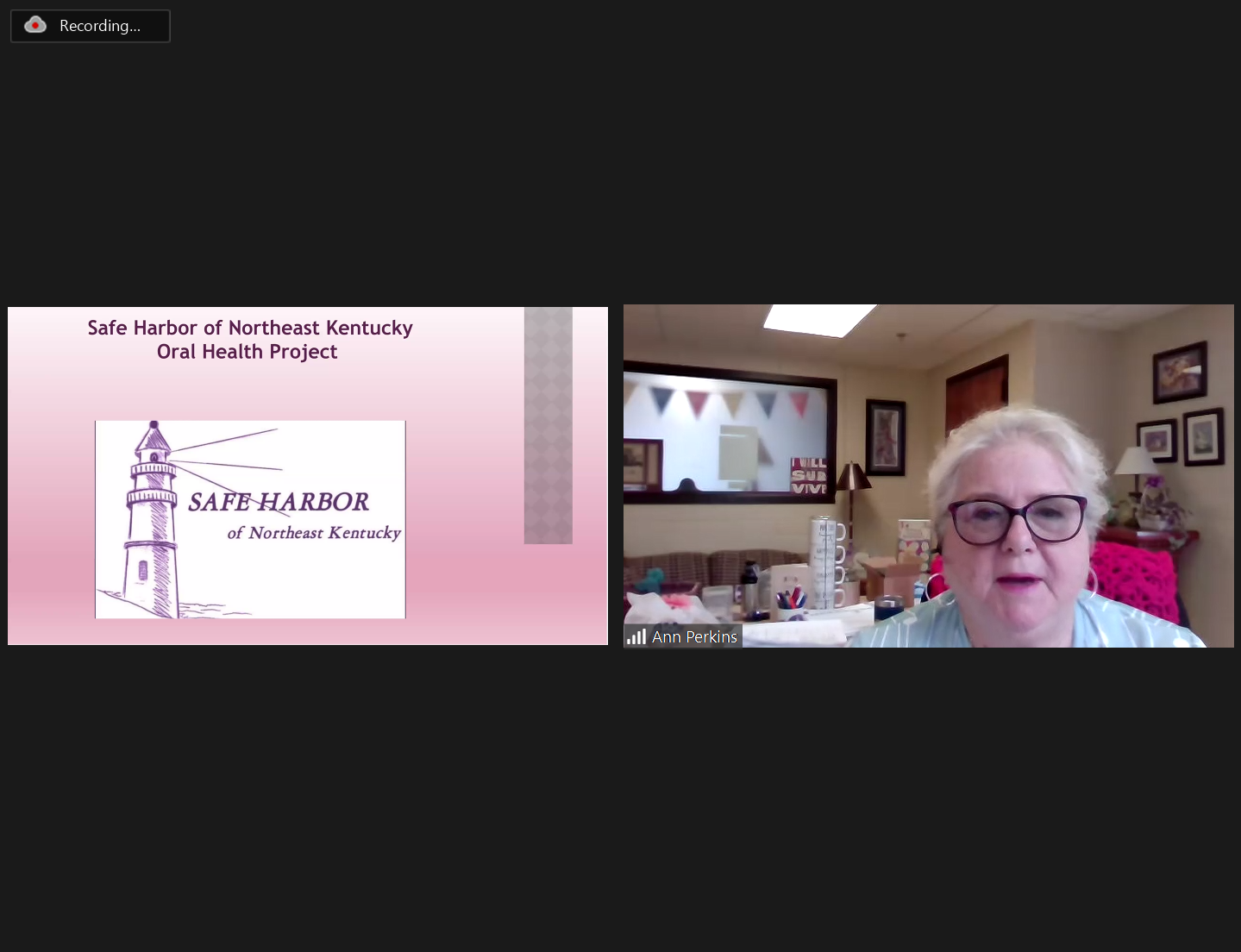
Alicia started the meeting off by introducing featured partners who received funding from KOHC this year to help with their work to improve oral health outcomes for special populations in Kentucky. Ann Perkins, Executive Director of Safe Harbor of Northeast Kentucky, shared how the KOHC funding helped them provide major restorative dental care to 7 individual victims of domestic violence in their programs. Safe Harbor has served over 20,000 people in 40 years of operation, serves almost 150 men, women, and children every day, and includes access to dental services as part of their ongoing work. Ann emphasized that dental care is a huge need for victims of domestic violence, due to mouth trauma or lack of care, and that dental issues can be a barrier to self-esteem, employment opportunities, and even in getting other needed healthcare. One of Safe Harbor’s recent clients faced delayed chemotherapy because she could not find the dental care she needed for abscessed teeth – Safe Harbor was able to help. Safe Harbor is part of a network of 15 domestic violence shelters serving all 120 Kentucky counties, and all of their services are free.
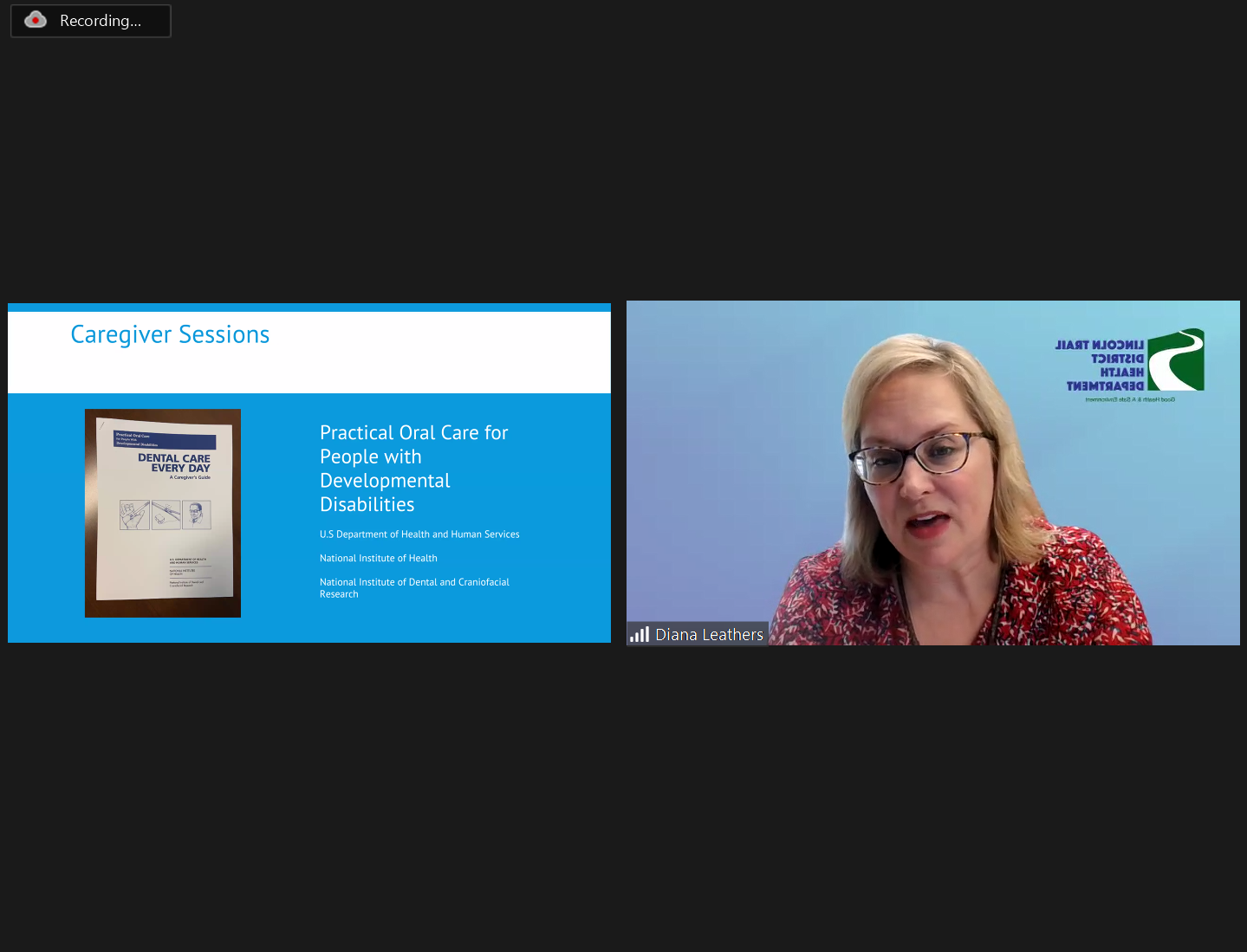
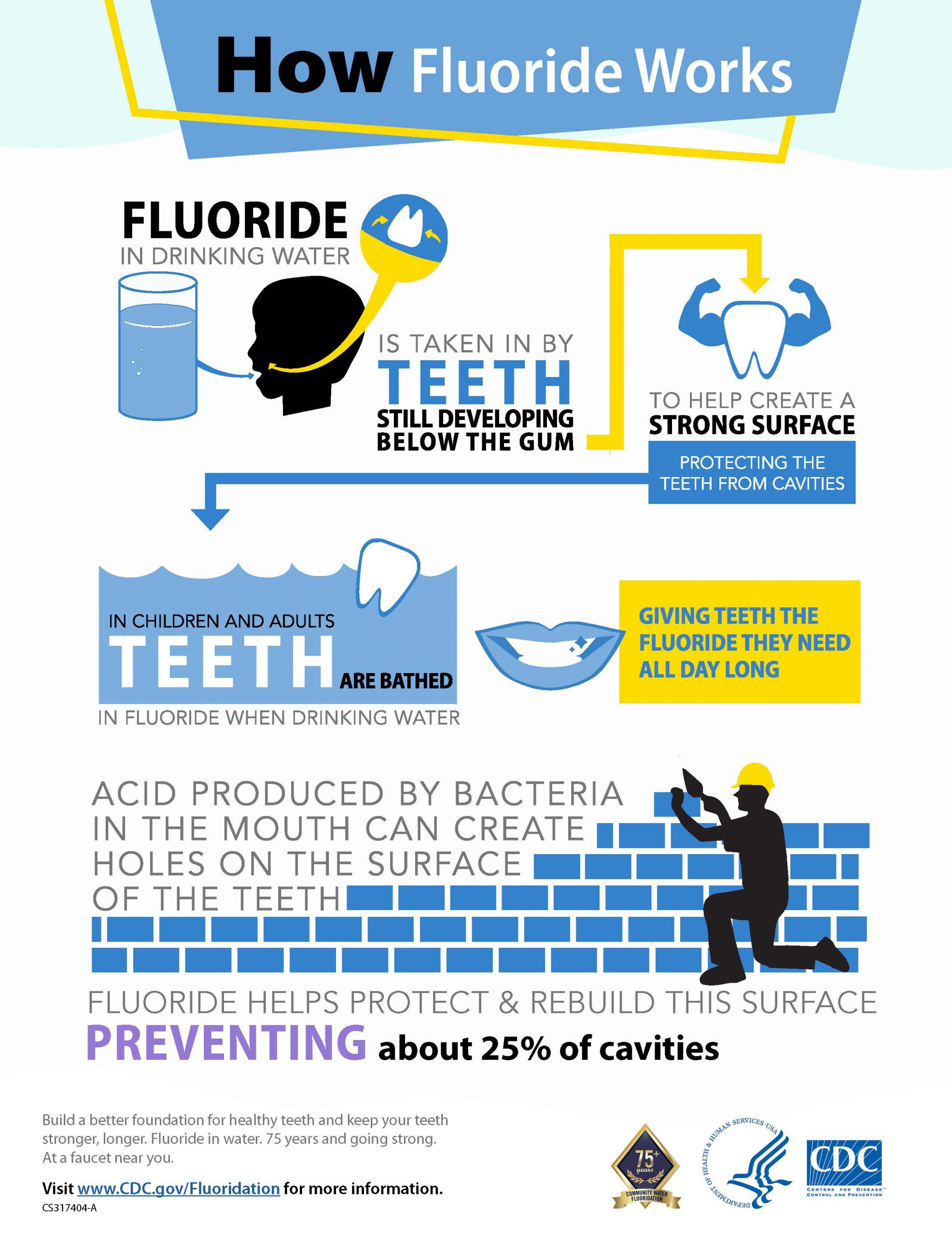
Next, Diana Leathers, Health Equity Manager for Lincoln Trail District Health Department (LTDHD), presented a summary of how they used the KOHC funding to increase oral health education, awareness, and connections with adults with intellectual and developmental disabilities (IDD) in their district. Individuals in households experiencing disabilities face disparities in access to oral healthcare. LTDHD is partnering with Communicare, which provides comprehensive services for adults with IDD in the Lincoln Trail region, to schedule 3 educational sessions for adults with IDD along with an additional session for caregivers. Pre- and post-tests are also part of the program to measure gains in oral health knowledge and improvement in oral health behaviors. Diana shared that the sessions so far have been very engaging, and that caregivers and adults with IDD are learning about techniques and products that can be helpful for good oral health. Participants are provided with publications — Practical Oral Care for People with Developmental Disabilities and How Fluoride Works – as well as a variety of tools and products tailored to assist with improving oral health for people with IDD. Also, in an impressive effort to increase access to care, Diana and LTDHD called every dentist in the six counties served to find which of them service Medicaid recipients. She is sharing that information, along with information about specialty clinics – Lee Specialty Clinic and Hazelwood Specialty Clinic in Louisville, and Oakwood in Somerset — that cater specifically to individuals with IDD. Diana is hopeful to continue the partnership with Communicare and find funding for the program next year.
Alicia then shared Coalition updates:
- A Save the Date is coming soon via email for the upcoming Virtual September Quarterly Meeting, and the in-person December Annual Meeting will be announced after that.
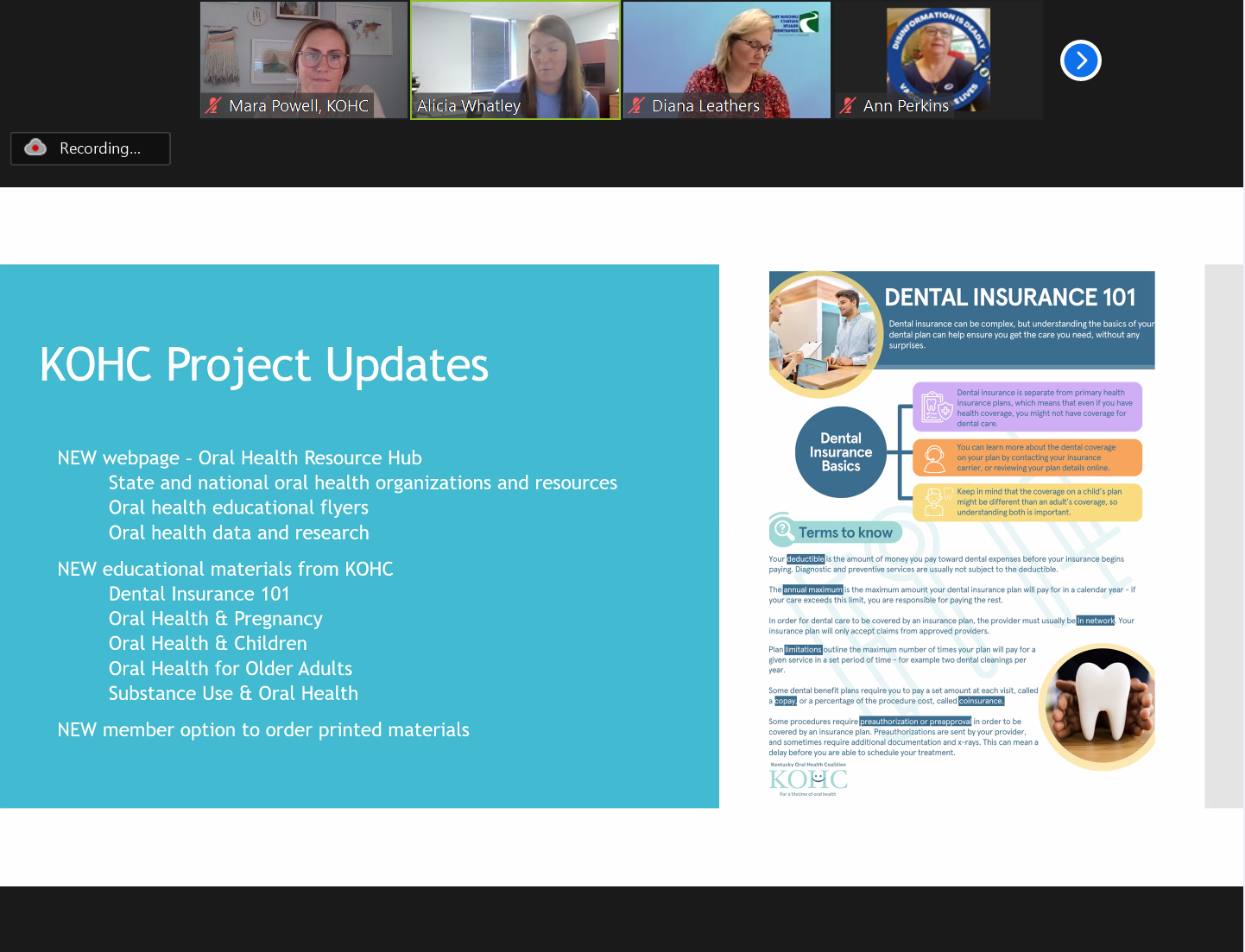
- KOHC has revamped its Resources Page to include the addition of 5 new patient-facing educational resources, along with state and national oral health resources, and data and research. Members of our steering committee and other long-term KOHC members advised on the content of the new educational resources, with the intention for them to be shared by providers to help in dental settings, as well as generally. KOHC will be sharing printed versions at upcoming vendor fairs, and coming soon we will email information about an order form for current KOHC members to obtain free high-quality printed copies. The digital versions are available now – check them out!
- Dental Insurance 101
- Oral Health and Pregnancy
- Oral Health and Children
- Oral Health for Older Adults
- Substance Use and Oral Health
Dr. Steve Robertson of the Kentucky Dental Association shared a member update regarding upcoming federal changes to the oral health landscape. These include the possible addition of adult dental care for those who use the Kynect portal, and a “secret shopper” access monitoring system to help ensure accurate Medicaid provider directories. He also shared that KDA is hoping to increase the number of dental hygiene and assisting programs in the state to help address the dental workforce issue, as well as support the expansion of roles for public health dental hygienists (PHRDH) to allow them to work in Federally Qualified Health Centers (FQHCs).
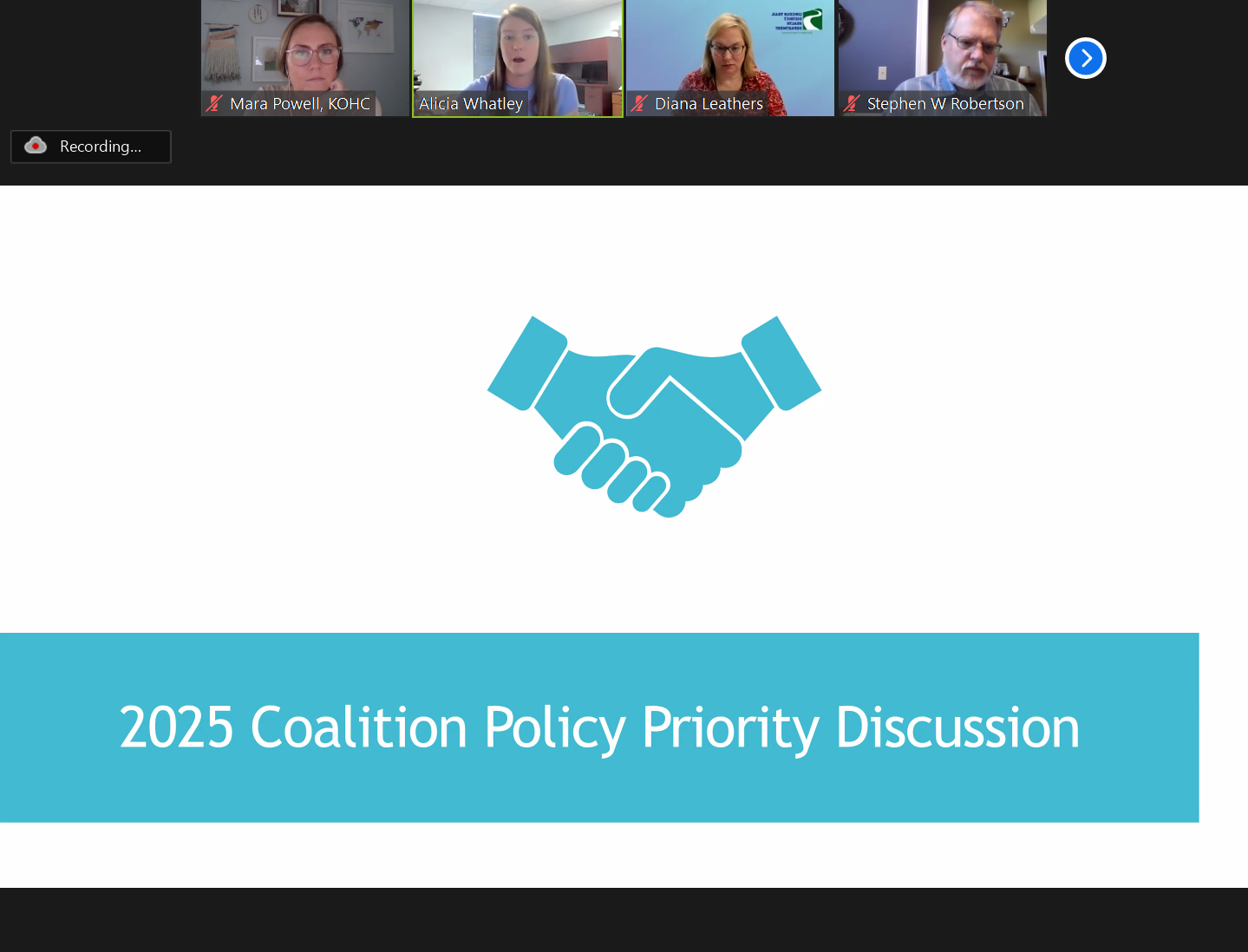
Alicia reminded participants of KOHC’s 2024 Policy Priorities and provided updates on their progress; and then helped to frame the member discussion about possible 2025 Policy Priorities. She noted that 2025 will not be a budget year for the legislature, so we may look for specifications on money that’s already been allocated and changes to be made that don’t require new budget allocations. We also want to consider ideas for how we can get in front of legislators during the interim period from now through December.
Among the possible 2025 priorities that members and advocates discussed in breakout groups were:
- Workforce
- Scope of practice/settings, including for PHRDH role
- Medicaid rates – which are of the highest priority to providers
- Prevention
- Protecting community water fluoridation
- Expanding fluoride varnish utilization
- Access to Care
- Mobile dental programs – increasing understanding and utilization, avoiding duplicate billing
KOHC welcomes input from all members and stakeholders regarding policy priorities for consideration by the full Coalition.
Linda Stettenbenz, Project Manager for Kentucky Youth Advocates, closed out the meeting with information about membership and other ways to support KOHC. View a recording of the meeting here. For meeting slides: June Quarterly-Presentation.