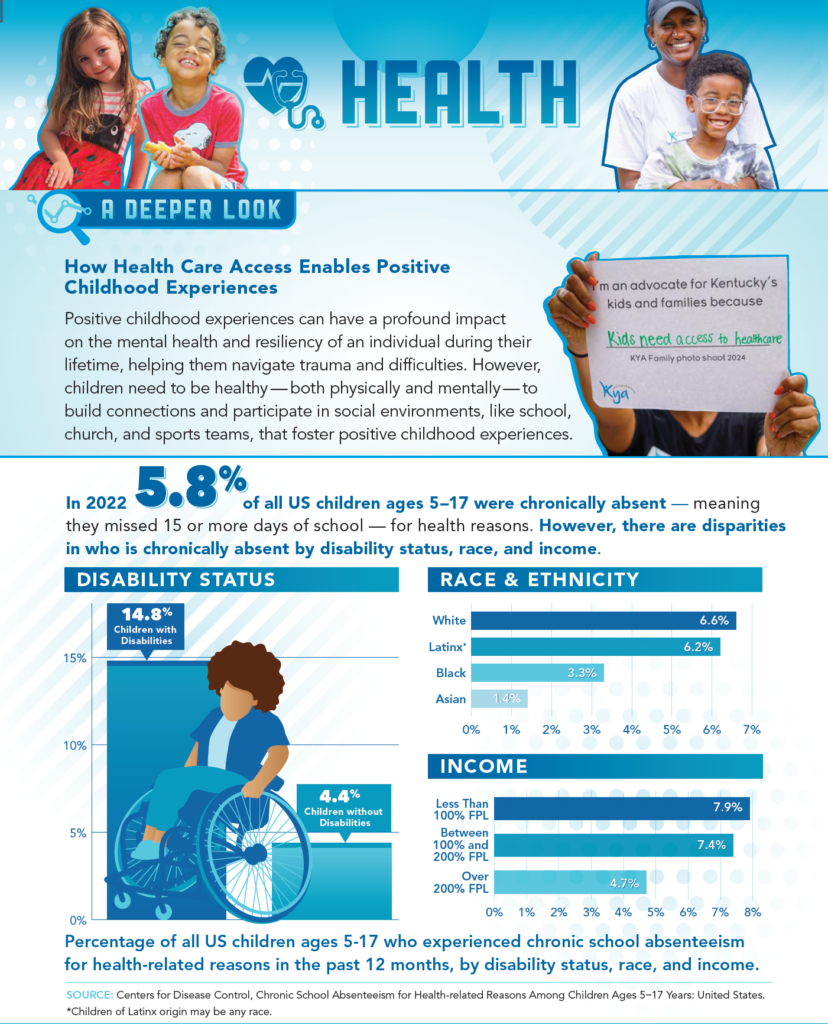

This week, Kentucky Youth Advocates released the 2024 KIDS COUNT County Data Book, highlighting key data indicators for child well-being in Kentucky. For 34 years, the book has been published and shared with community partners and decision-makers as a lever for change. Statewide data is gathered to show whether outcomes have improved, stayed the same, or worsened over a five-year period (or as close as possible). The data is then broken down by race/ethnicity, disability status, geography (county), and income to see where disparities exist, and research-based solutions are recommended. Supplemental County Profiles and an interactive County Data Dashboard provide more county-level information, including the baseline rates used for comparison in the Data Book. This year’s focus is on the growing understanding of research that stable, nurturing environments can help prevent and protect children from the toxic stress and trauma of harmful community conditions such as poverty, discrimination, and community violence. However, children need to be physically and mentally healthy to participate and build connections with community supports like school, church, and sports teams that foster positive childhood experiences.
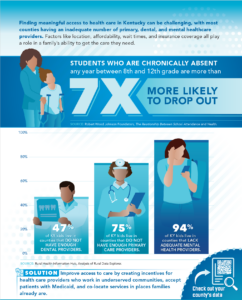
The Data Book highlights inequities in access to healthcare for Kentucky’s children, along with opportunities to remedy them. Among the data shared was that nationally, low-income children as well as children with disabilities are much more likely to be chronically absent from school for health reasons. 47% of Kentucky kids live in counties that do not have enough dental providers and 75% live in counties that do not have enough primary care providers.
One of the young people who contributed qualitative research in this year’s Data Book was Lilah who said that “access to oral health care allowed me to live my life without the constant mouth pain that I had become accustomed to. It gave me better childhood experiences because it allowed me to feel comfortable smiling and laughing in pictures.”
To help ensure that all of Kentucky’s kids have access to healthcare needed for resiliency, KYA recommends creating incentives for healthcare providers who work in underserved communities, accept patients with Medicaid, and co-locate services in places families already are.
KOHC members and advocates can help connect the dots among data, healthy communities, and improved oral health for all Kentuckians by sharing information from the County Data Book with partners and decision-makers. For a deeper dive into the data, visit the KIDS COUNT Data Center and attend the 2024 Kentucky KIDS COUNT Data Book Webinar on Thursday, November 21st at 12:00 PM ET via Zoom.