Along with barbecues and fireworks, the 4th of July also brought a new federal budget signed into law. Although the reconciliation package saw several versions before final passage, many of the changes we highlighted earlier this Summer were finalized under the new law.
Among the largest cuts in the program’s history are those to the Medicaid program. The final version of the bill has broad implications over the next ten years, with changes including:
- Work requirements and co-pays for some adult recipients
- More frequent eligibility checks and renewals
- Increased funding required from states to cover program costs
- Limitations on the ways states can generate funds to meet these requirements
These changes are projected to have a big impact on Medicaid recipients in Kentucky with increased administrative burden, cost to individuals, and loss of coverage. More broadly these changes are expected to reduce offered services or even close hospitals across the state impacting all Kentuckians and local economies.
Another benefit program that will see significant changes is the Supplemental Nutrition Assistance Program (SNAP). Historically this program has been largely supported by the federal government, with state funds covering half of the administrative costs. Under the new legislation, states will be required to begin paying for a larger portion of the administrative costs and a portion of the benefits themselves. These cuts could negatively impact food access for families across the Commonwealth.
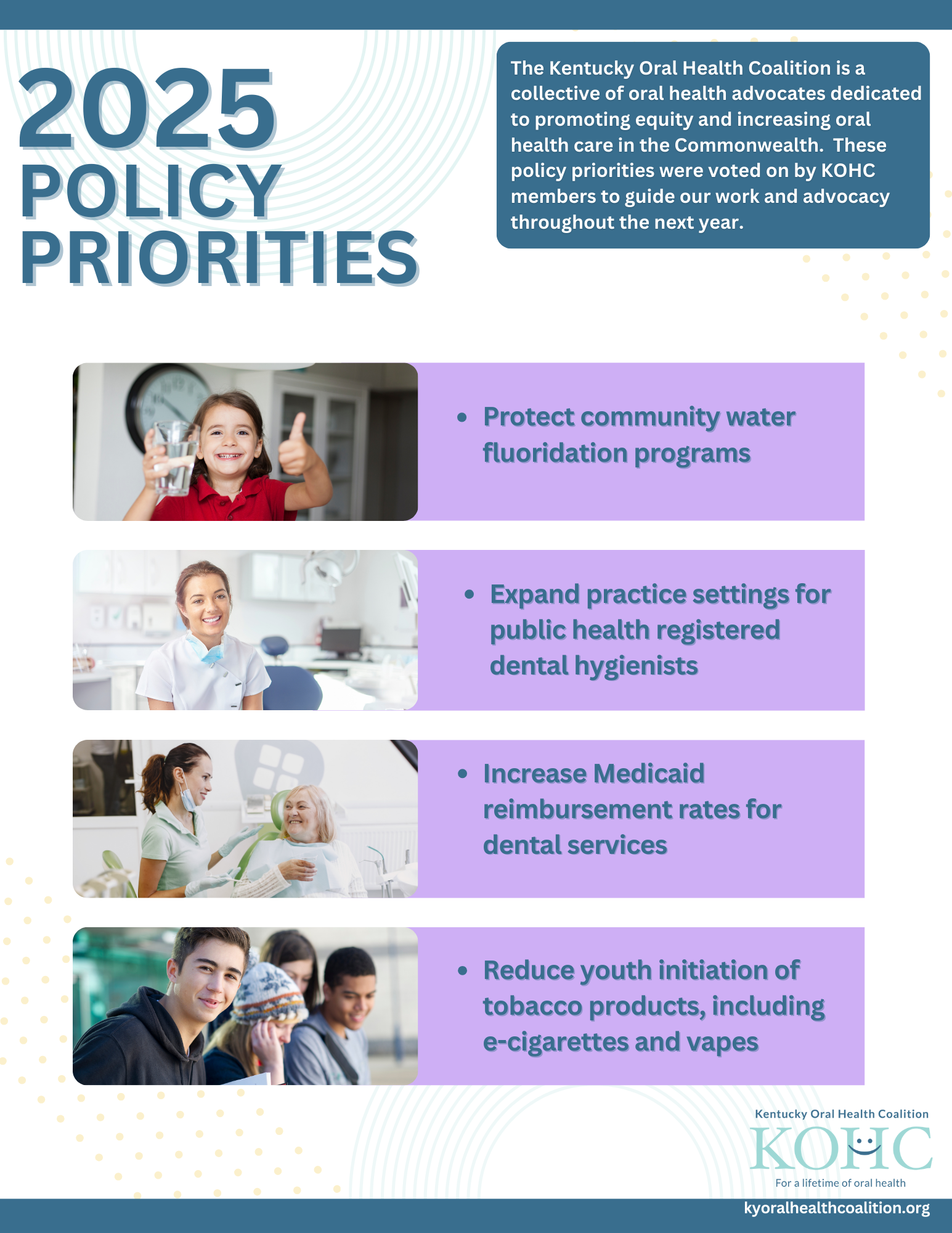
Between Medicaid and SNAP changes, states are expected to see increased financial strain with gaps in the federal funds supporting these critical programs. State leaders and decision makers will be tasked with deciding whether to allocate more state dollars to maintain current programs, reduce or eliminate certain programs, or identify new funding sources to support the programs moving forward. These financials challenges could impact recent KOHC priorities, such as increasing Medicaid dental reimbursement rates.
It’s important to keep in mind that the changes included in the bill will be implemented over the course of ten years – meaning not everything highlighted here goes into effect right away. While the potential impacts of this legislation are daunting, there are still important actions our state legislators can take in 2026 to help support individuals across the Commonwealth.