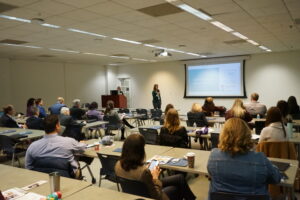
 The 2023 KOHC Annual Meeting convened this year on Friday, December 1st at the University of Kentucky in Lexington. We had a robust day-long agenda with engaging presenters and good discussions among participants. Kelly Pullen, Aetna SKY Executive Director, kicked off the meeting to share information about Aetna Better Health of Kentucky, the meeting’s Signature Sponsor.
Dr. Adrienne Lapidos, Clinical Associate Professor, University of Michigan Medical School, shared her keynote presentation about the connections between behavioral health and oral health. Dr. Lapidos noted that people experiencing effects of trauma are more likely to have barriers to optimal oral health and recommended a practice of trauma-informed care to recognize signs and symptoms of patient trauma and avoid re-traumatization. Her suggested techniques included using motivational interviewing and the teach-back method.
Dr. Lapidos also shared insight from her experiences and research in developing the Oral Health Recovery Project. The project used peer support specialists and coaches who shared a combination of their own mental health and substance use challenges as well as their oral health recovery stories to encourage others to improve their oral health. Community health workers and peer support workers were recommended by Dr. Lapidos to help alleviate barriers and reduce no-shows in the communities they serve. She also recommended seeking guidance to implement behavioral-oral health integration programs.
We heard more about community health workers (CHWs) in Kentucky from Laura Eirich with the Kentucky Department of Public Health Office of Community Health Workers. She explained certification requirements for CHWs and how they can help connect clients and families to resources and assist with health systems in culturally and linguistically appropriate ways. They can also help with documentation and reporting.
Erica Jones with the Department for Medicaid Services shared more about the benefits of using CHWs to facilitate provider communication and coordination and appointment management and informed about requirements for using dental billing codes for CHWs.
Leah Smothers of the Purchase District Health Department Floss and Gloss Program, using her experience and wisdom with CHW integration into the dental setting, suggested best practices for implementation. These included having a plan for data tracking and setting clear roles and expectations. She noted that the CHW is a full-time position.
Jennifer Hasch gave updates about the UK Early Learners Surveillance Study, a partnership between the Kentucky Cabinet for Health and Family Services and the University of Kentucky College of Dentistry. The project involves recruitment and coordination of dental hygienists to screen children aged 5 and under to identify needs and create programs across the state to address them. Data is being analyzed now from nearly 7,000 screenings conducted throughout the state. Findings will be shared in 2024.
Dr. Julie McKee, Dental Director of Kentucky, and Richard Crask of the Kentucky Department of Public Health presented information about the history of fluoridation in Kentucky, the public health benefits, how the system works to ensure quality, and how to address challenges to the fluoridation system with elected leaders.
Alicia Whatley, Policy and Advocacy Director with Kentucky Youth Advocates, presented findings from the 2023 KOHC Landscape Assessment, which gathered data from consumers and providers to assess perceived barriers and solutions to dental health. Through focus groups and surveys, KOHC heard from 671 people in 111 Kentucky counties. The landscape assessment report also links to existing state and national data to outline needs. The report’s recommendations include using alternative options for care such as teledentistry and co-locating services, increasing Medicaid reimbursement rates, and expanding access to oral health resources for underserved communities.
Alicia wrapped up the meeting by facilitating member discussion and voting on 2024 policy priorities. The following were approved by the Coalition:
- Protect community water fluoridation programs
- Increase Medicaid reimbursement rates for dental providers
- Protect current services covered in the Medicaid program
- Reduce youth initiation of tobacco products, including e-cigarettes and vapes
Thank you to all who attended this year’s annual meeting!
Meeting slides can be found here:
- Alicia Whatley SLIDES: Landscape Assessment, Policy Agenda, Member Voting
- Dr. Adrienne Lapidos SLIDES: Oral Health Behavioral Health Connection
- Laura Eirich SLIDES: Community Health Workers in Kentucky
- Erica Jones SLIDES: Community Health Workers in Oral Health
- Leah Smothers SLIDES: Community Health Workers Integration
- Jennifer Hasch SLIDES: UK Early Learners Surveillance Study